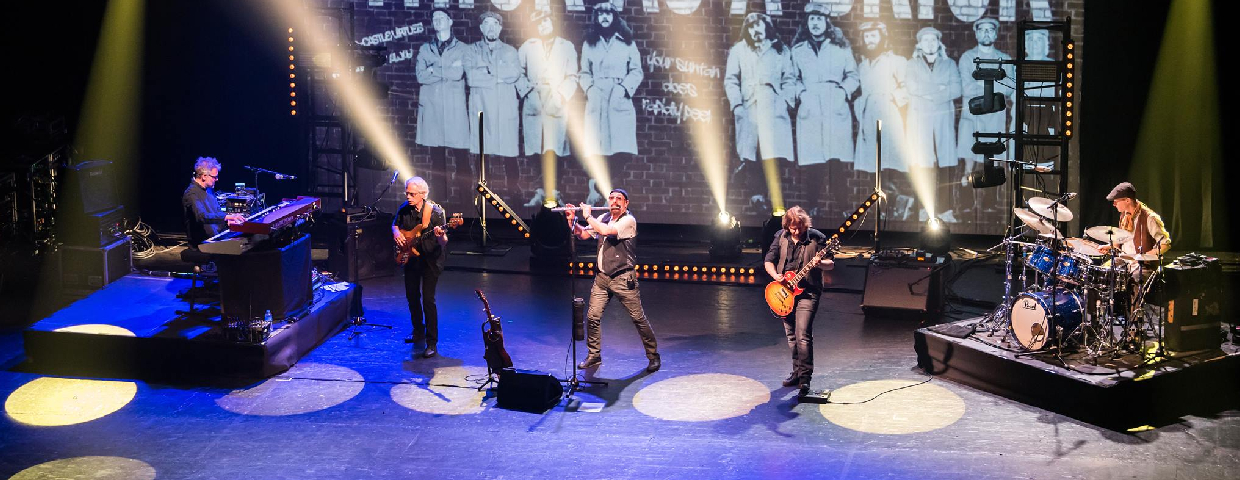
Formed in Blackpool, England, in 1967, Jethro Tull began as a blues-rock band before evolving into a pioneering progressive rock ensemble. Ian Anderson, the group's founder and only consistent member, served as the band's lead vocalist, guitarist, and distinctive flautist—famously performing while standing on one leg. Their debut album, This Was (1968), showcased a strong blues foundation, while their second album, Stand Up (1969), brought them their first UK number-one hit and wider recognition.
Their early 1970s era delivered classics like Aqualung (1971), Benefit, and the ambitious concept work Thick as a Brick (1972), solidifying their position in progressive rock. In the late 1970s, the band shifted toward British folk-rock with albums such as Songs from the Wood (1977) and Heavy Horses (1978), seamlessly blending acoustic textures and complex arrangements.
The 1980s saw Jethro Tull experiment with synthesizers and electronic elements, including on albums like A (1980) and the Grammy-winning Crest of a Knave (1987). Though they continued releasing music into the early 2000s—including a Christmas album in 2003—they largely stepped back from studio recording after that era, focusing on live performances until their initial split in 2011. After this, Ian Anderson continued to tour under the “Jethro Tull” banner.
The band returned to recording in 2022 with The Zealot Gene, their first studio album of new material in nearly two decades, followed by RökFlöte (2023) and Curious Ruminant (2025). Today’s lineup performs classic hits and recent originals, maintaining Jethro Tull’s reputation as one of the most consistent, influential, and musically adventurous bands in rock history.