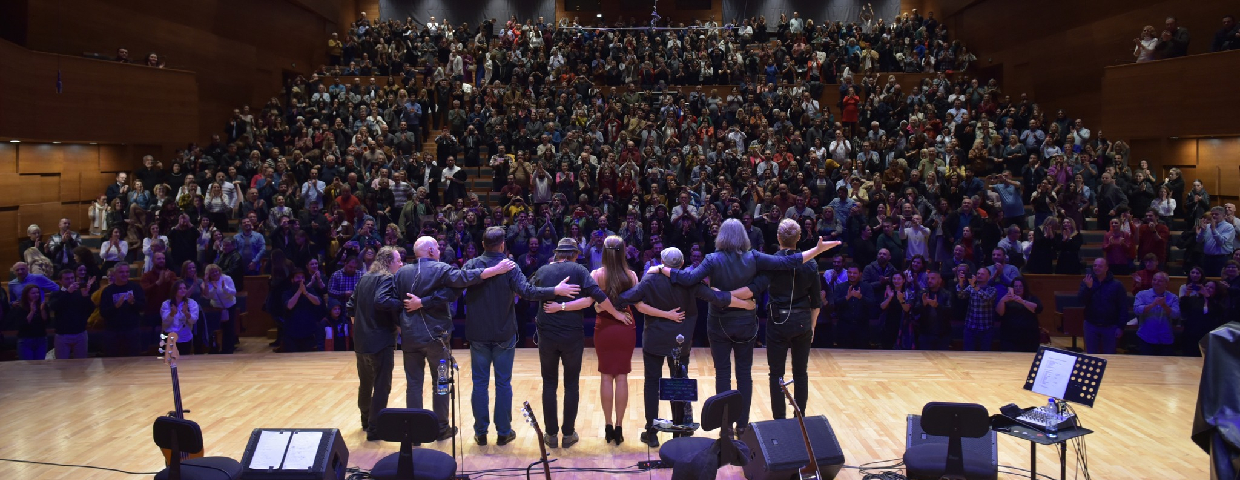
Galija is a Serbian rock band formed in Niš in early 1977. The group took its name from the local tavern where founder Nenad Milosavljević and his collaborators would gather. Their first rehearsal took place on January 4, 1976, and soon they emerged as a promising act on the Yugoslav rock scene.
In 1979, they released their debut album Prva plovidba, featuring early hits like “Avanturista,” “Gospi,” and “Decimen.” This was followed by Druga plovidba (1980) and Ipak verujem u sebe (1982), which included tracks such as “Burna pijana noć” and “Još uvek sanjam.” Throughout the 1980s, Galija gradually transitioned from progressive symphonic rock toward mainstream pop-rock, delivering albums like Bez naglih skokova (1984), the hit single “Digni ruku” from the 1986 album, and their acclaimed trilogy Daleko je sunce (1988), Korak do slobode (1989), and Istorija, ti i ja (1991), including well-known songs like “Skadarska,” “Stare trube,” and “Da li si spavala.”
Despite the challenges of the 1990s, Galija continued to produce albums such as Karavan (1994), Trinaest (1996), Voleti, voleti (1997), and Južnjačka uteha (1999), the latter featuring traditional folk arrangements and timeless tracks like “Dodirni me,” “Uzalud se trudiš,” “Kotor,” and “Pismo.” After a brief hiatus, they returned in 2005 with Dobro jutro, to sam ja, bringing a pop-rock sound with hits like “Možda sam lud” and “Ti možeš sve.” Their most recent studio album, Mesto pored prozora (2010), marked a return to a purer rock aesthetic—simple, authentic, and heartfelt.
Renowned for their longevity and musical integrity, Galija has remained anchored by Nenad Milosavljević's vision, ensuring continuity amid lineup and stylistic changes. Over more than four decades, the band became one of the most significant rock acts in former Yugoslavia and Serbia, with an impressive catalog and dynamic live presence. They remain active today, performing at regional festivals and preparing new music.