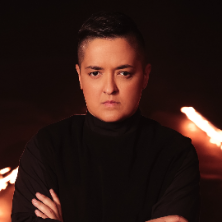
Marija Šerifović was born on November 14, 1984, in Kragujevac, Serbia. Growing up in a musical family, she began singing publicly as a child. Her debut album Naj, najbolja was released in 2003, which introduced her to audiences across the Balkans.
In 2004, she gained broader recognition by winning the Pjesma Mediterana festival in Budva with the song "Bol do ludila." Her follow-up album Bez ljubavi came out in 2006. In 2007, she represented Serbia at the Eurovision Song Contest in Helsinki with the ballad "Molitva," winning first place on May 12. Her victory was a historic moment as Serbia's first win as an independent country, celebrated across the region.
She continued her success with the albums Nisam anđeo (2008) and Anđeo (2009), producing notable hits like "Ne voliš je znam," "Jedan dobar razlog," and "Sve po starom." In 2013, she released the documentary Ispovest, in which she publicly addressed mental health, personal struggles, and her LGBTQ identity, becoming the first openly gay public figure in Serbian pop culture.
Her 2014 album Hrabro further solidified her reputation. Since 2015, Marija has served as a judge and mentor on the Serbian talent show Zvezde Granda, mentoring two winners in 2019 and 2021.
From 2019 to 2023, she released several hit singles such as "Pametna i luda," "Svoja i tvoja," and "Deo prošlosti." In 2023, she released the album Dolazi ljubav, featuring the duet "Pola sunca" with Matija Cvek, which became a regional hit. That same year, she became a mother via surrogate, sharing the news openly with her followers.
Marija Šerifović remains one of the most respected artists in the region, celebrated for her powerful voice, emotional depth, and socially conscious artistry.